Home / What happens after pickup
After pickup
What happens to a scrap car after pickup
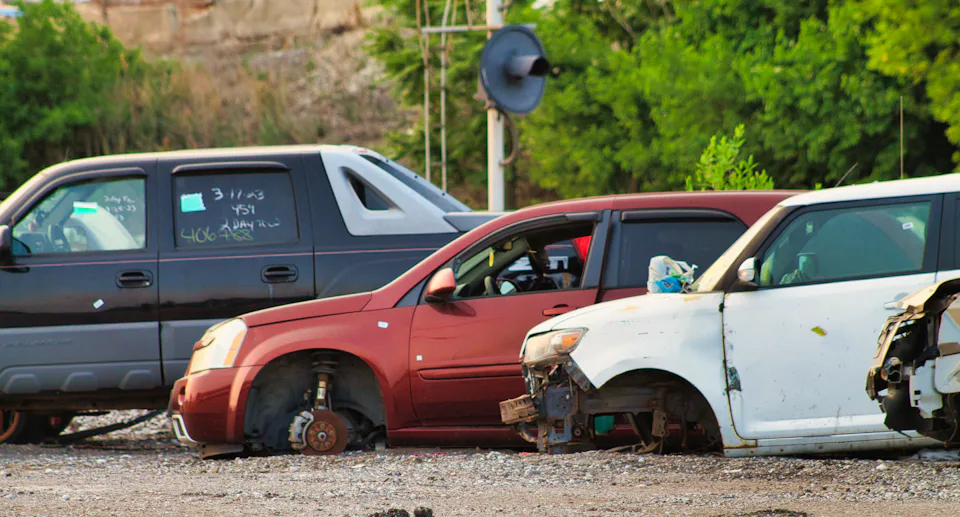
Once the truck pulls away, your car makes a few stops before it turns back into raw metal. Here's the route, step by step.
- Fluids drained and recycled
- Good parts pulled for reuse
- Metal shredded, sorted and melted down
Rather call or text? 604-337-2232
- Based at26909 Alder Dr, Aldergrove
- Calls and texts604-337-2232
- OpenEvery day, 8am to 8pm
- We takeCars, trucks, vans and SUVs
The short version
- Drop-off. The car is taken to a licensed vehicle recycler and logged.
- Depollution. Fuel, oil, coolant and other fluids are drained, and the battery comes out.
- Parts. Anything worth reselling, like an engine, doors or lights, is pulled.
- Crushing. The stripped body is flattened so more fit on a truck.
- Shredding. A shredder tears it into fist-sized chunks, and the metals are sorted.
- Melting. The steel goes to a mill and becomes new steel.
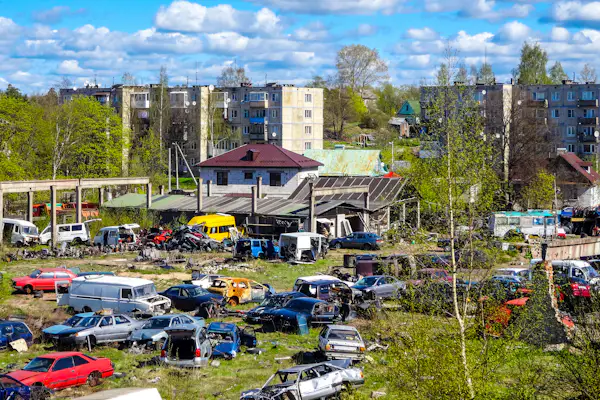
Step by step, from your driveway to the steel mill
Here's what happens at each stop, and why it matters to you as the seller.
01Logging the car in
When a car reaches the recycler, it's checked against its paperwork and logged by its VIN. That record, along with your signed Transfer/Tax Form, is what shows the car left your hands.
Keep your copy of the transfer form somewhere safe. It's your proof of the date and time you sold the vehicle if a parking ticket or toll bill ever turns up later.
02Draining the fluids
A scrap car can still hold litres of fuel, engine oil, transmission fluid, coolant, brake fluid and washer fluid. These are drained before anything else, so they don't leak into the soil.
In BC, used oil and antifreeze go into a recycling program run by the BC Used Oil Management Association. Refrigerant from the air conditioning is recovered with a machine rather than vented.
03Battery and mercury switches
The 12-volt battery comes out next. Lead-acid batteries are among the most recycled products there are: the lead and plastic case are both reused.
Many older vehicles also have small mercury switches, mostly in hood and trunk lights. Canada runs a national program to collect these before cars are crushed, so the mercury doesn't end up in new steel or in the air.
04Tires, glass and the catalytic converter
Tires come off and go to recycling through BC's tire stewardship program, rather than being shredded in with the metal.
The catalytic converter is removed by the recycler, not by us. Its inside is coated with platinum, palladium and rhodium, which are recovered. Since 2022, detached converters have been regulated in BC, which is why we only buy whole vehicles.
05Parts that get a second life
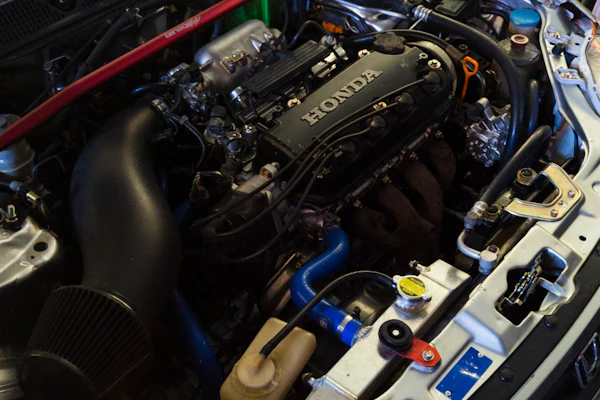
If a car has good parts, they're often worth more than the metal around them. Engines, transmissions, alternators, doors, mirrors and lights get pulled, tested and sold to people fixing the same model.
That's one reason a complete car is worth more than one that's been picked over: the parts that would have been resold are already gone.
06Crushing and shredding
What's left is a stripped body. It's flattened so a truck can carry a stack of them, then fed through a shredder that tears it into chunks about the size of a fist.
Big magnets pull out the steel. Other machines separate aluminum, copper and other metals. The leftover plastic, foam, fabric and glass is called shredder residue.
07Back into steel
The shredded steel goes to a mill, where it's melted down and made into new steel products, from rebar to new car parts. Aluminum and copper go to their own buyers.
So the old Corolla from the driveway really does come back, just not as a Corolla.
Your car on the periodic table
A quick look at the main materials in a typical car and where each one ends up.
- 26FeIron and steel
Body, frame, doors and block. Shredded and melted at a steel mill.
- 13AlAluminum
Wheels and engine parts. Sorted out after shredding and remelted.
- 29CuCopper
Wiring, starter, alternator. Recovered and sold separately.
- 82PbLead
The battery. Recycled into new batteries.
- 78PtPlatinum group
Inside the catalytic converter, with palladium and rhodium.
- 80HgMercury
Small switches in older cars. Collected before crushing.
Rules recyclers follow in BC
BC has had a regulation for vehicle dismantlers and recyclers since 2007. It requires them to plan how they handle the waste a car leaves behind, from fluids and batteries to the ground the cars sit on.
That's why the order matters: fluids out first, then the battery, then parts, then crushing. A car that skips those steps can leave oil and coolant in the soil for years.
More on the province's rules: Vehicle recycling and dismantling, Government of BC.
What it all means for you
None of this needs you to do anything after pickup day. Before the truck comes, though, a few minutes of prep saves headaches:
- Empty the glovebox, trunk and door pockets
- Take the plates off and keep them or hand them in
- Have the registration and photo ID ready
- Keep your copy of the signed transfer form
- Call your broker about any insurance still on it
- Remove garage remotes and toll transponders
Ready to book? Get a quote for scrap car removal in Aldergrove, or read about the areas we cover.
Questions about what happens next
Does a scrap car get crushed right away?
No. Before any crushing, the fluids are drained, the battery comes out and parts worth reselling are pulled. Only the stripped body goes on to be flattened and shredded, which can be days or weeks after pickup.
Where do the oil and coolant go?
They're drained into containers and sent for recycling. In BC, used oil and antifreeze are collected through a program run by the BC Used Oil Management Association, so they're re-refined or reused instead of ending up in the ground.
What happens to the catalytic converter?
It stays on the car when we pick it up and is removed later by the recycler. The inside is coated with small amounts of platinum, palladium and rhodium, which are recovered. Loose converters are regulated in BC, so we only buy whole vehicles.
Can I get something back out of the car after pickup?
Call us as soon as you can and we'll check. Once a car has been processed, anything left inside is gone. That's why it's worth checking the glovebox, trunk and under the seats before the truck comes.
How do I know the car is out of my name?
Keep your copy of the signed Transfer/Tax Form (APV9T). It shows the date and time you sold the vehicle. Take the plates off before pickup and call your broker about any insurance still on it.
What's left after a car is shredded?
Mostly a mix of plastic, foam, fabric, rubber and glass that can't be sorted into metal. It's often called shredder residue or fluff, and most of it ends up in landfill, though recyclers keep finding uses for more of it.
Want your old car to take the trip?
Send the year, make and model with where it's parked, or just call. We're open every day from 8am to 8pm.